 Free Shipping Over$200

- Products
- Marking
- Alternative

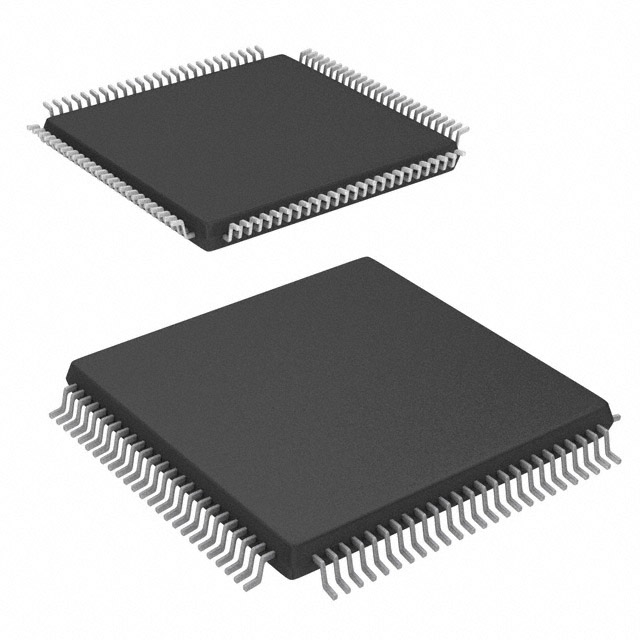
Microchip Technology ATMEGA2560-16AU
- Part No.:
- ATMEGA2560-16AU
- Manufacturer:
- Microchip Technology
- Category:
- Microcontrollers
- Package:
- 100-TQFP
- Datasheet:
-
 ATMEGA2560-16AU.pdf
- Description:
- IC MCU 8BIT 256KB FLASH 100TQFP
- Quantity:
Unit Price:$16.777800
Ext Price:$16.777800
- Payment:

- Shipping:

Inventory:5,630
Send us your inquiry,we will respond immediately.
In Stock : 5,630 PCS
| Qty. | Unit Price | Ext Price |
| 1+ | $16.777800 | $16.777800 |
| 1500+ | $11.984100 | $17976.150000 |
*Products eligible for online ordering ship within 1-2 business days,please contact us for exact shipping times.
Also you can RFQ for ATMEGA2560-16AU or email to us: Email: [email protected] , we will contact you within 12 hours.
Product Details
ATMEGA2560-16AU - Microchip 8-bit AVR Microcontroller (256KB Flash / TQFP-100)
ATMEGA2560-16AU is a high-performance 8-bit AVR microcontroller from Microchip Technology, featuring 256KB self-programmable Flash, 8KB SRAM, 4KB EEPROM, housed in a 100-pin TQFP package with 16MHz clock support, widely used in embedded control, industrial automation, and instrumentation.
Product Introduction
ATMEGA2560-16AU is the flagship 8-bit AVR microcontroller from Atmel (now Microchip), based on a Harvard architecture with 256KB self-programmable Flash, 8KB SRAM, and 4KB EEPROM. It integrates comprehensive communication peripherals (4 UARTs, SPI, I2C) and supports a 16MHz external crystal oscillator.
The AVR architecture's core advantage lies in its single-cycle instruction execution efficiency and powerful interrupt system. Most instructions complete in one clock cycle, delivering 16 MIPS at 16MHz - sufficient for complex state machines, real-time data processing, and multitasking schedulers.
The 100-pin TQFP package (14mm x 14mm) provides 86 programmable I/Os, 16-channel 10-bit ADC, 4x 16-bit timers, 6 PWM channels, and up to 4 UARTs. This combination of compact size and extensive I/O resources makes it ideal for industrial control boards and instrumentation designs.
Expert Technical Insights
Why is the ATmega2560 the standard choice for Arduino Mega, and what are its core technical strengths?
- Self-programming Flash with Boot Loader support: The ATmega2560 features a configurable Boot Loader section (1KB~8KB) that supports in-application programming via SPI or UART - enabling remote firmware upgrades without a dedicated programmer, dramatically reducing field maintenance costs and simplifying the product lifecycle management process
- Rich integrated communication peripherals: Four independent UARTs (with hardware LIN and RS-485 support), one SPI (master/slave), two TWI/I2C ports (Philips I2C compatible), and one JTAG debug interface - all operating simultaneously without mutual interference, making it ideal for complex multi-sensor, multi-protocol embedded systems
- Precision analog peripherals: 16-channel 10-bit successive approximation ADC reaching 76.9kSPS (single-channel), built-in Programmable Gain Amplifier (PGA, 1x to 10x gain) and temperature sensor channel - enabling direct connection of thermistors, pressure sensors, and other analog-output transducers without external signal conditioning circuitry
Key Benefits
Large program memory with Boot Loader support enables remote firmware upgrades without a dedicated programmer.
Supports LIN, RS-485 multi-protocol communication. Up to 4 serial devices connected simultaneously.
16-channel 10-bit ADC, 6x PWM, 4x 16-bit timers - extensive peripheral resources in one chip.
Single-cycle instruction execution delivers 16MIPS throughput, efficiently handling complex control algorithms and state machines.
Specifications
| Parameter | Value | Conditions / Notes |
|---|---|---|
| Core Architecture | 8-bit AVR, Harvard architecture | Single-cycle instructions |
| Manufacturer | Microchip Technology | USA |
| Flash Program Memory | 256KB | Self-programmable with Boot Loader |
| SRAM | 8KB | High-speed static RAM |
| EEPROM | 4KB | Non-volatile data storage |
| Max Clock Frequency | 16MHz | External crystal oscillator |
| Throughput | 16 MIPS | 16MHz, single-cycle instruction |
| GPIO Ports | 86 | Programmable I/O |
| ADC Channels | 16 | 10-bit resolution, 76.9kSPS |
| PWM Channels | 6 | 16-bit timer PWM outputs |
| UART | 4 | Hardware LIN and RS-485 support |
| SPI | 1 | Master/slave modes |
| I2C / TWI | 2 | Philips I2C compatible |
| JTAG | Supported | Boundary scan and debug |
| Package | TQFP-100 | 14mm x 14mm, 0.5mm pitch |
| Operating Temperature | -40C ~ +85C | Industrial grade |
Note: For detailed electrical parameters, timing characteristics, and peripheral programming guidelines, refer to the official ATmega2560 datasheet. Engineers must verify all parameters before final design.
Package Information
ATMEGA2560-16AU uses the TQFP-100 package (Thin Quad Flat Package), a 100-pin surface-mount package measuring 14mm x 14mm with 0.5mm pin pitch and 1.0mm height. The bottom features an exposed thermal pad compatible with standard PCB pad patterns and SMT reflow soldering processes.
The TQFP package offers a smaller PCB footprint than DIP packages while providing superior pin visibility and solder joint reliability compared to QFN. All 100 pins are distributed along four sides (25 pins per side), providing abundant I/O resources. The large exposed center pad should be grounded or connected to the PCB ground plane through multiple vias for optimal thermal performance.

Pin Definition (TQFP-100)
ATMEGA2560-16AU has 100 pins organized into four port groups (PA through PL) and special-function pins:
- PA0~PA7 (pins 82~89): 8-bit bidirectional I/O Port A, also serving as ADC channels 8~15 (10-bit SAR ADC). PA7 also functions as ICP3 (Input Capture 3).
- PB0~PB7 (pins 10~17): 8-bit bidirectional I/O Port B, supporting OC0A/OC0B (Timer0 PWM), OC1A/OC1B/OC1C (Timer1 PWM), SS (SPI Slave Select), SCK (SPI Clock), MOSI/MISO (SPI data).
- PC0~PC7 (pins 22~29): 8-bit bidirectional I/O Port C, also serving as JTAG interface (TDI, TDO, TMS, TCK) for boundary scan and in-circuit debugging.
- PD0~PD7 (pins 32~39): 8-bit bidirectional I/O Port D, supporting INT0~INT3 (external interrupts), OC2A/OC2B (Timer2 PWM), T0/T1 (counter inputs).
- PE0~PE7 (pins 1~8): 8-bit bidirectional I/O Port E, supporting UART0 (RXD0/TXD0), UART1 (RXD1/TXD1), ICP1 (Input Capture 1).
- PG0~PG4, PH0~PH7, PJ0~PJ7, PL0~PL7: Additional port groups serving UART2/3, SPI1, and other peripheral multiplexing functions. See official datasheet for full pin assignment.

Equivalent / Alternative Parts
The following alternative parts are listed for reference. Before selecting an alternative, verify communication interface, supply voltage, memory capacity compatibility, and software API differences.
| Part Number | Brand | Type | Package | Key Feature |
|---|---|---|---|---|
| ATmega2561-16AU | Microchip | 8-bit AVR / 256KB / 16MHz | TQFP-64 | 64-pin version, same memory, fewer I/Os, for compact designs |
| ATmega1280-16AU | Microchip | 8-bit AVR / 128KB / 16MHz | TQFP-100 | Same 100-pin package, 128KB Flash lower-capacity alternative |
| AT90CAN128-16AU | Microchip | 8-bit AVR / CAN / 128KB | TQFP-64 | Built-in CAN controller, automotive-grade alternative |
| ATmega1284P-PU | Microchip | 8-bit AVR / 128KB / DIP-40 | DIP-40 | DIP package for breadboard prototyping, lower cost |
| STM32F407VGT6 | STMicroelectronics | 32-bit ARM Cortex-M4 / 1MB | LQFP-100 | 32-bit high-performance alternative, much more powerful but different architecture |
| CY8C4245LQI-483 | Infineon | 32-bit ARM Cortex-M0 / 32KB | TQFP-32 | Small package, integrated programmable analog/digital peripherals |
| LPC1768FBD100 | NXP | 32-bit ARM Cortex-M3 / 512KB | LQFP-100 | 100-pin compatible, 32-bit upgrade, higher performance |
Selection Tips: ATmega2560's key advantage is its mature open-source ecosystem (Arduino Mega platform) and massive market presence. For higher performance, consider 32-bit Cortex-M series alternatives - but expect complete software driver rewrites.
Manufacturer Information
Microchip Technology Inc. (NASDAQ: MCHP), headquartered in Chandler, Arizona, USA, is a leading global supplier of microcontrollers, analog semiconductors, and Flash-IP solutions. Microchip acquired Atmel in 2016, adding the AVR and SAM microcontroller families to its portfolio, creating a comprehensive MCU product line spanning PIC, AVR, and ARM Cortex-M0/M3/M4 architectures.
The ATmega family represents Microchip's most successful general-purpose 8-bit MCU product line. ATmega2560, with its 256KB Flash, 4 UARTs, and 100-pin package, has become the standard chip for industrial control, 3D printing (particularly the RepRap/Marlin ecosystem), and large-scale data acquisition systems. The Arduino community's Arduino Mega 2560 development board, powered by ATmega2560, is one of the most widely adopted open-source hardware platforms globally, generating an exceptionally rich ecosystem of libraries, tutorials, and community support.
Application Areas



Frequently Asked Questions
What is ATMEGA2560-16AU used for?
ATMEGA2560-16AU is used in electronic designs according to the function and limits described in the manufacturer datasheet.
Can ATMEGA2560-16AU be replaced by another part?
Only after verifying package, pinout, electrical limits and software or circuit compatibility.
Where should the final parameters be checked?
Use the official manufacturer datasheet and latest ordering documentation before final design release.
Disclaimer
Information Accuracy: Technical specifications on this page are based on the official ATmega2560 datasheet. We strive for accuracy but specifications are subject to change without notice. Designers must verify all parameters before final design.
Product Authenticity: We guarantee all products are genuine factory originals with complete material traceability.
Technical Support: Free technical consultation available before and after purchase.
Application Notes: This product page is for reference only. Suitability for specific applications must be verified by the design engineer based on actual system requirements.
ATMEGA2560-16AU Specifications
- Specifications
- Attributes
- Property Value
- Manufacturer
- Microchip Technology
- Package/Case:
- 100-TQFP
- Series:
- AVR® ATmega
- Packaging:
- Tray
- Part Status:
- Active
- Programmable:
- Verified
- Core Processor:
- AVR
- Speed:
- 16MHz
- Connectivity:
- EBI/EMI, I2C, SPI, UART/USART
- Peripherals:
- Brown-out Detect/Reset, POR, PWM, WDT
- Grade:
- -
- Number of I/O:
- 86
- Program Memory Size:
- 256KB (128K x 16)
- Core Size:
- 8-Bit
- Program Memory Type:
- FLASH
- EEPROM Size:
- 4K x 8
- Operating Temperature:
- -40°C ~ 85°C (TA)
- RAM Size:
- 8K x 8
- Qualification:
- -
- Oscillator Type:
- Internal
- Voltage - Supply (Vcc/Vdd):
- 4.5V ~ 5.5V
- Data Converters:
- A/D 16x10b
- Mounting Style:
- Surface Mount
- Supplier Device Package:
- Category:
- Microcontrollers
ATMEGA2560-16AU Relevant information
- ATMEGA2560-16AU Tags
- Popular Search
The following parts are popular search parts in Microcontrollers.
The Posts
-
Exploring the Features of AN431AN - ATRG1 Voltage Reference IC
The AN431AN - ATRG1 is a significant voltage reference integrated circuit (IC) that plays a crucial role in maintaining stable voltage levels within electronic circuits. Engineered with precision, it o…

-
Unveiling the Wonders of XP1002000 - 05R Electronic Component
The XP1002000 - 05R is an electronic component that stands out for its specialized design and functionality, catering to a variety of electronic system requirements.Unique FeaturesOne of the most notab…
-
Unraveling the Wonders of MMBF170LT1 Transistor
The MMBF170LT1 is a remarkable transistor that has carved a niche for itself in the electronic component landscape. This tiny yet powerful device is engineered with precision to deliver outstanding per…
-
Unveiling the Marvels of MMBF170LT3G Transistor
The MMBF170LT3G is a high - performance transistor that stands out in the realm of electronic components. Engineered with precision, it brings a set of features that make it a valuable asset in numerou…
-
Unveiling the Features of RD16E - T1 - AZ Electronic Component
The RD16E - T1 - AZ is an electronic component that brings a set of unique features to the table. Its design showcases precision engineering, catering to specific requirements in various electronic set…
-
Unveiling the Capabilities of RD16ES - T1 - AZ Electronic Component
The RD16ES - T1 - AZ is a remarkable electronic component that combines advanced technology with practical design to meet the demands of diverse electronic projects.Electrical FeaturesOne of the key as…
Related Products
-
ATTINY4-TSHR
Microchip Technology
-
ATTINY10-TSHR
Microchip Technology
-
ATTINY10-TS8R
Microchip Technology
-
ATTINY202-SSNR
Microchip Technology
-
ATTINY202-SSFR
Microchip Technology
-
ATTINY402-SSNR
Microchip Technology
-
PIC16F15213T-I/MF
Microchip Technology
-
PIC16F15213-E/MF
Microchip Technology
-
PIC10F200T-I/OT
Microchip Technology
-
ATTINY412-SSNR
Microchip Technology
-
PIC10F202T-I/OT
Microchip Technology
-
ATTINY404-SSNR
Microchip Technology


